1.1 - Purpose and Scope of Section 608
Regulatory verification date: August 5, 2026
Primary authority: Clean Air Act Section 608 and 40 CFR Part 82, Subpart F
Course role: Introductory foundation for all later Core, Type I, Type II, and Type III material
Learning Objectives
After completing this section, a student should be able to:
- Explain why Section 608 of the Clean Air Act was established.
- Describe the relationship between Section 608 and the federal National Recycling and Emission Reduction Program.
- Identify the general types of refrigeration and air-conditioning equipment addressed by Section 608.
- Identify the general maintenance, service, repair, and disposal activities regulated under Section 608.
- Distinguish EPA Section 608 technician certification from a state or local HVAC trade license.
- Summarize the responsibilities of technicians, equipment owners or operators, and employers.
- Explain how Section 608 connects environmental protection, refrigerant conservation, safe service practice, and technician competency.
- Identify the major Section 608 topics that will be developed in later modules of this course.
Introduction
Refrigeration and air-conditioning systems transfer heat by circulating a refrigerant through a closed system. During normal operation, the refrigerant is intended to remain inside that system. During installation, maintenance, service, repair, recovery, equipment replacement, or disposal, however, the refrigerant circuit may be opened. If the work is performed incorrectly, refrigerant can be released into the atmosphere.
Some refrigerants damage the stratospheric ozone layer. Other refrigerants do not deplete ozone but may have significant climate impacts. Refrigerant releases also waste a valuable working fluid, increase operating cost, and may create health or safety hazards. For these reasons, refrigerant handling is not treated as an ordinary unregulated maintenance activity.
Section 608 of the Clean Air Act establishes federal requirements for managing refrigerants used in refrigeration and air-conditioning equipment. EPA implements these requirements primarily through 40 CFR Part 82, Subpart F, commonly referred to as the Section 608 refrigerant-management regulations.
Section 608 is not limited to one rule or one examination topic. It creates a connected compliance system involving:
- Technician certification.
- Refrigerant recovery.
- Recycling and reclamation.
- Certified recovery and recycling equipment.
- Prohibition of intentional venting.
- Required service practices.
- Refrigerant sales restrictions.
- Safe disposal.
- Leak-repair requirements for applicable equipment.
- Recordkeeping and reporting.
- Responsibilities for technicians, businesses, owners, operators, and disposers.
This course will examine each of these areas in detail. This first section introduces the overall purpose and scope so that later requirements can be understood as parts of one refrigerant-management system rather than as isolated facts to memorize.
Key Concepts
1. Section 608 Is Part of the Clean Air Act
The Clean Air Act is the federal law under which EPA regulates air pollutants and protects air quality. Section 608 addresses refrigerant management associated with refrigeration and air-conditioning equipment.
EPA describes the Section 608 program as the National Recycling and Emission Reduction Program. The program is designed to reduce refrigerant emissions by requiring proper handling, recovery, recycling, reclamation, servicing, and disposal practices.
For this course, remember the following hierarchy:
- Clean Air Act — the federal law.
- Section 608 — the part of the law addressing refrigerant management for covered appliances and activities.
- 40 CFR Part 82, Subpart F — the federal regulations that implement the program.
- EPA guidance and official test topics — materials explaining how the regulations apply.
- EPA-approved certifying organizations — organizations authorized to administer Section 608 certification examinations.
Section 608 technician certification is therefore a federal environmental certification connected to refrigerant handling. It is not merely a voluntary industry credential.
2. The Main Purpose Is Emission Reduction and Refrigerant Conservation
The central purpose of Section 608 is to reduce refrigerant emissions from refrigeration and air-conditioning equipment.
The program seeks to accomplish this purpose by requiring that refrigerant be managed instead of intentionally released. Depending on the situation, refrigerant may be:
- Recovered and stored in an external container.
- Recycled for reuse after basic cleaning.
- Reclaimed to an established purity specification.
- Returned to the same appliance.
- Transferred or disposed of through an authorized process.
- Removed before equipment is dismantled or discarded.
Section 608 also establishes technician-certification and equipment requirements so that the people performing refrigerant work understand the applicable procedures and have suitable tools.
The program is based on an important engineering and environmental principle:
Refrigerant should remain in a closed system whenever possible, and it should be captured and managed whenever the system must be opened.
Detailed definitions of recover, recycle, and reclaim are provided later in Module 5.
3. Section 608 Primarily Addresses Stationary Refrigeration and Air Conditioning
Section 608 generally addresses refrigeration and air-conditioning appliances other than motor-vehicle air-conditioning systems serviced under Section 609.
Examples of equipment addressed within the Section 608 framework include:
- Household refrigerators and freezers.
- Room air conditioners.
- Packaged terminal air conditioners.
- Dehumidifiers.
- Residential split-system air conditioners.
- Residential and commercial heat pumps.
- Rooftop air-conditioning units.
- Commercial refrigeration systems.
- Supermarket refrigeration equipment.
- Industrial-process refrigeration systems.
- Chillers.
- Other stationary refrigeration and air-conditioning appliances.
The exact certification type depends on the appliance category and operating pressure. These categories are introduced in Section 1.3 and developed in the Type I, Type II, and Type III modules.
Motor-vehicle air-conditioning systems are primarily addressed under Section 609. The boundary and overlap between Sections 608 and 609 are explained in Section 1.4.
4. Section 608 Regulates Activities That Can Release Refrigerant
Section 608 applies to work that can reasonably be expected to release refrigerant from an appliance.
At a general level, this includes activities associated with:
- Maintenance.
- Service.
- Repair.
- Refrigerant charging.
- Refrigerant removal.
- Opening the refrigerant circuit.
- Replacing refrigerant-containing components.
- Cutting or disconnecting refrigerant lines.
- Connecting or disconnecting service hoses and gauges.
- Disposal of covered appliances.
Examples include:
- Attaching a manifold gauge set to an appliance.
- Removing refrigerant before replacing a compressor.
- Adding refrigerant after a repair.
- Opening a system to replace an evaporator or condenser.
- Recovering refrigerant before equipment is scrapped.
- Removing a refrigerant-containing component.
The detailed legal definition of a technician, including activities that do and do not require certification, is covered in Section 1.2.
5. Section 608 Is a Complete Refrigerant-Management System
A common mistake is to think that Section 608 contains only the prohibition against venting. The venting prohibition is important, but it is only one part of the program.
The major program elements are summarized below.
| Program Element | General Purpose | Developed Later In |
|---|---|---|
| Technician certification | Ensures that people performing covered refrigerant work pass an EPA-approved examination | Sections 1.2, 1.3, and 1.5 |
| Prohibition on intentional venting | Prevents intentional atmospheric release of regulated refrigerants during covered activities | Module 2 |
| Recovery requirements | Requires refrigerant to be captured before or during service and disposal | Modules 5, 7, 8, and 9 |
| Certified recovery and recycling equipment | Requires suitable equipment tested to meet applicable EPA standards | Module 5 |
| Evacuation and service practices | Establishes required refrigerant-removal levels and procedures before opening appliances | Modules 5, 8, and 9 |
| Refrigerant sales restrictions | Limits purchase of regulated refrigerants to authorized buyers | Module 2 |
| Recycling and reclamation | Controls how used refrigerant is cleaned, reused, transferred, or returned to specification | Module 5 |
| Safe disposal | Establishes responsibilities for refrigerant removal before disposal | Module 6 |
| Leak repair | Requires repair, verification, recordkeeping, or other action for applicable appliances and refrigerants | Module 8 |
| Recordkeeping and reporting | Documents refrigerant transactions, service activities, disposal, and regulatory compliance | Modules 2, 6, 8, and 11 |
This table is an overview. The exact applicability of each requirement depends on factors such as:
- Refrigerant type.
- Appliance type.
- Refrigerant charge.
- Service activity.
- Equipment manufacture date.
- Whether the refrigerant is an ozone-depleting substance or a substitute.
- Whether a substitute is exempt from a particular provision.
- Whether the appliance is being serviced, repaired, or disposed of.
These conditions are developed throughout the course.
6. Section 608 Certification Is Not the Same as an HVAC Trade License
EPA Section 608 certification demonstrates that a person has passed an EPA-approved examination concerning refrigerant handling for the applicable equipment category.
It does not by itself establish that the person is authorized to:
- Operate an HVAC contracting business.
- Perform electrical work.
- Perform fuel-gas work.
- Install equipment under a building permit.
- Design an HVAC system as a licensed professional engineer.
- Perform every type of HVAC service in every state or municipality.
States, counties, and cities may impose separate requirements, including:
- HVAC contractor licenses.
- Refrigeration licenses.
- Operating-engineer licenses.
- Electrical licenses.
- Plumbing or fuel-gas licenses.
- Business registrations.
- Permits.
- Supervision requirements.
- Continuing education.
A technician may therefore need both:
- The appropriate EPA Section 608 certification for refrigerant work.
- Any separate state or local license required for the broader HVAC task.
The two credentials serve different purposes.
| Credential | Primary Purpose |
|---|---|
| EPA Section 608 certification | Federal refrigerant-handling and environmental compliance |
| State or local HVAC license | Authorization to perform regulated trade or contracting work within a jurisdiction |
| Professional engineer license | Authorization to offer or approve regulated engineering services within a jurisdiction |
| Manufacturer training certificate | Evidence of training on specific equipment or products |
| Employer qualification | Internal authorization based on company procedures, experience, and safety requirements |
Passing a Section 608 examination is essential for covered refrigerant work, but it does not replace technical experience, safety training, manufacturer instructions, or other legal requirements.
7. Federal Requirements Are a Minimum, Not the Entirety of Good Practice
Section 608 establishes federal minimum requirements for refrigerant management. A technician must also follow other applicable requirements, including:
- Manufacturer service instructions.
- Equipment safety warnings.
- Recovery-equipment instructions.
- Cylinder-manufacturer requirements.
- Occupational safety requirements.
- Fire and building codes.
- State and local environmental rules.
- Electrical safety procedures.
- Refrigerant-specific safety procedures.
- Employer policies.
A procedure can satisfy one Section 608 requirement and still be unsafe or technically improper if other requirements are ignored.
For example, recovering refrigerant is required, but recovery must also be performed with:
- Correctly selected equipment.
- A suitable recovery cylinder.
- Proper hose connections.
- Adequate ventilation.
- Required personal protective equipment.
- Appropriate control of ignition sources.
- Procedures suitable for the refrigerant.
The certification examination focuses on Section 608 knowledge, but competent engineering and engineering-technology practice requires understanding the technical and safety reasons behind the rules.
8. Section 608 Applies Through Responsibilities, Not Only Through Job Titles
Compliance depends on the activity being performed and the role of the person or organization.
A person may be subject to Section 608 requirements even if the person’s job title is not “HVAC technician.” Depending on the activity, regulated persons may include:
- HVAC service technicians.
- Refrigeration technicians.
- Installers.
- Maintenance employees.
- Facilities personnel.
- Building owners performing their own service.
- Contractor employees.
- Equipment owners or operators.
- Refrigerant sellers.
- Refrigerant reclaimers.
- Scrap processors.
- Final disposers.
- Employers responsible for service operations.
The exact technician definition and apprentice provisions are addressed in Section 1.2.
Technical and Regulatory Details
1. Regulatory Basis
The principal federal regulatory basis for this course is:
- Clean Air Act Section 608
- 40 CFR Part 82, Subpart F — Recycling and Emissions Reduction
Subpart F includes definitions, prohibitions, service-practice requirements, recovery-equipment requirements, technician certification, reclamation, sales restrictions, leak repair, and recordkeeping provisions.
Because regulations and EPA guidance may change, current official sources control over older study guides.
2. Purpose of Technician Certification
Technician certification supports the program by requiring a person performing covered work to demonstrate knowledge of:
- Environmental effects of refrigerants.
- Applicable federal requirements.
- Refrigeration fundamentals.
- Recovery procedures.
- Required evacuation levels.
- Safe refrigerant handling.
- Equipment-specific requirements.
- Type I, Type II, or Type III appliance procedures.
The certification categories are based primarily on the type of appliance to be serviced, not on one specific refrigerant. For example, EPA does not issue a separate federal “R-410A certification” that replaces Section 608 certification.
3. Scope of the Venting Prohibition
Section 608 prohibits intentional venting of ozone-depleting refrigerants and non-exempt substitutes during covered maintenance, service, repair, and disposal activities.
The regulations recognize limited permitted releases, including releases associated with good-faith recovery efforts and certain exempt substitutes or uses. These exceptions are specific and should not be interpreted as general permission to vent refrigerant.
The detailed venting rules are covered in Module 2.
4. Scope of Substitute-Refrigerant Requirements
Older study guides often describe Section 608 mainly in terms of CFC and HCFC refrigerants. Current requirements are broader.
Many Section 608 provisions also apply to most non-exempt substitute refrigerants, including requirements related to:
- Technician certification.
- Sales restrictions.
- Recovery and evacuation.
- Certified recovery equipment.
- Reclamation.
- Safe disposal.
However, not every provision applies identically to every substitute refrigerant. For example, EPA’s current Section 608 leak-repair provisions apply to applicable appliances containing ozone-depleting refrigerants, while separate current requirements may apply to certain HFC-containing equipment under other federal programs.
The course will clearly distinguish:
- Current Section 608 requirements.
- Historical Section 608 requirements.
- Exempt substitutes.
- Separate current refrigerant-management requirements outside the traditional Section 608 leak-repair framework.
5. Responsibility for Keeping Knowledge Current
EPA certification credentials do not expire, but regulations and industry practices can change.
A certified technician is responsible for:
- Following current requirements.
- Using current recovery and service procedures.
- Recognizing when an older study guide is outdated.
- Checking official EPA updates.
- Following current manufacturer and safety information.
Certification is not permission to rely permanently on the information that existed on the date of the examination.
Responsibilities Within the Section 608 Program
Technician Responsibilities
At an overview level, a technician is responsible for:
- Obtaining the correct certification for the equipment being serviced.
- Avoiding intentional venting.
- Using appropriate certified recovery or recycling equipment.
- Following required recovery and evacuation practices.
- Preventing refrigerant cross-contamination.
- Using suitable cylinders.
- Following safety procedures.
- Complying with applicable recordkeeping requirements.
- Keeping knowledge current.
Equipment Owner or Operator Responsibilities
Depending on the appliance and refrigerant, an owner or operator may be responsible for:
- Ensuring that covered service is performed by appropriately certified personnel.
- Maintaining required records.
- Providing accurate appliance and refrigerant information.
- Complying with applicable leak-repair requirements.
- Maintaining records of refrigerant additions, removals, repairs, verification tests, retrofit, or retirement.
- Ensuring proper refrigerant management during equipment disposal.
Employer and Service-Company Responsibilities
An employer or service company may be responsible for:
- Assigning appropriately certified technicians.
- Providing suitable recovery and safety equipment.
- Maintaining equipment and records.
- Preventing refrigerant mixing and contamination.
- Following refrigerant-purchase requirements.
- Training employees in current procedures.
- Complying with state and local requirements in addition to federal requirements.
Disposal-Chain Responsibilities
When equipment reaches the end of its useful life, refrigerant must be properly removed before the equipment is dismantled or discarded when required.
Responsibilities may involve:
- The equipment owner.
- The person removing refrigerant.
- The transporter.
- The scrap processor.
- The final disposer.
The safe-disposal requirements are developed in Module 6.
Important Terms
Appliance
For Section 608 purposes, an appliance is refrigeration or air-conditioning equipment containing and using refrigerant. The regulatory definition is broad and includes many categories of residential, commercial, and industrial equipment.
Clean Air Act
The Clean Air Act is the federal law under which EPA administers Section 608 refrigerant-management requirements.
Emission
An emission is the release of refrigerant into the atmosphere.
Intentional Venting
Intentional venting is the knowing release of regulated refrigerant to the atmosphere during covered activities, except where a specific regulatory allowance or exemption applies.
National Recycling and Emission Reduction Program
The National Recycling and Emission Reduction Program is EPA’s refrigerant-management program established under Section 608.
Refrigerant
A refrigerant is a substance used for heat transfer in refrigeration or air-conditioning equipment. A refrigerant commonly absorbs heat while evaporating and rejects heat while condensing.
Section 608 Technician Certification
Section 608 Technician Certification is the federal certification earned by passing an EPA-approved examination for the applicable appliance category.
Stationary Refrigeration and Air Conditioning
Stationary refrigeration and air conditioning generally refers to equipment not primarily regulated as a motor-vehicle air-conditioning system under Section 609. Detailed boundary cases are addressed later in Module 1.
Figures and Diagrams
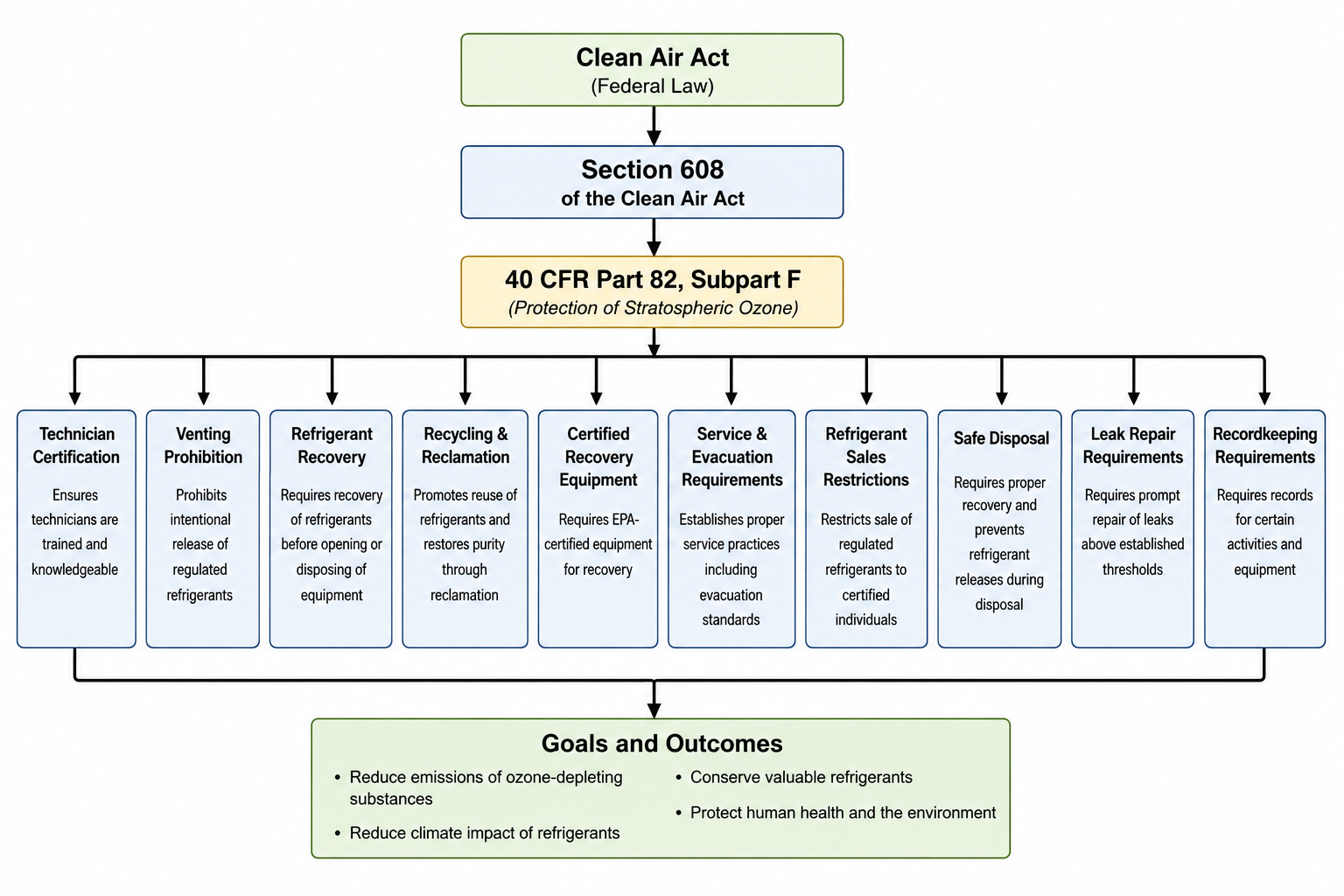
Figure 1.1.1 – Purpose and general scope of the EPA Section 608 refrigerant-management program.
AI-generated instructional figure: It may contain visual inaccuracies. Use the accompanying lesson text and cited authoritative sources to verify technical and regulatory details.
EPA 608 Exam Focus
What Students Must Remember
- Section 608 is part of the Clean Air Act.
- EPA implements the program through 40 CFR Part 82, Subpart F.
- The program addresses refrigerant management for refrigeration and air-conditioning equipment.
- Its central purpose is to reduce refrigerant emissions and promote proper recovery, recycling, reclamation, service, and disposal.
- Section 608 includes more than the venting prohibition.
- Certification is based on the type of appliance being serviced.
- Section 608 certification is not the same as a state or local HVAC contractor license.
- Motor-vehicle air-conditioning service is primarily addressed under Section 609.
- Current official EPA information controls over outdated study guides.
- A certification credential does not expire, but the technician must still comply with later regulatory changes.
Typical Exam Question Patterns
Students may be asked to identify:
- Which federal law contains Section 608.
- Which agency administers the program.
- The main purpose of refrigerant recovery requirements.
- Whether Section 608 certification replaces a state trade license.
- Whether Section 608 addresses only intentional venting.
- Which general equipment category belongs under Section 608.
- Why technicians must use certified recovery equipment.
- Who may have compliance responsibilities besides the individual technician.
- Whether an old study guide remains controlling after a regulation changes.
Key Reading Words
Pay particular attention to:
- Not
- Except
- Primary
- Best
- Required
- Federal
- State
- Current
- Intentional
A question may include several statements that are generally reasonable but only one that accurately describes the federal Section 608 requirement.
Common Mistakes and Confusing Points
Mistake 1: Treating Section 608 as Only a Venting Rule
Section 608 also addresses certification, recovery equipment, service practices, sales, reclamation, disposal, leak repair, and records.
Mistake 2: Treating Certification as a Complete HVAC License
Section 608 certification concerns refrigerant handling. Separate state or local licenses may still be required.
Mistake 3: Assuming Only CFC and HCFC Refrigerants Matter
Many requirements also apply to most non-exempt substitute refrigerants. Applicability must be checked by provision and refrigerant.
Mistake 4: Assuming Every Refrigerant Requirement Is Identical
Requirements vary by:
- Appliance type.
- Refrigerant.
- Charge size.
- Service activity.
- Recovery-equipment manufacture date.
- Whether the work is service, repair, or disposal.
Mistake 5: Confusing Section 608 with Section 609
Section 608 generally addresses stationary refrigeration and air conditioning. Section 609 primarily addresses motor-vehicle air-conditioning service.
Mistake 6: Relying on a Fixed Penalty Amount From an Old Book
Civil monetary penalties can be adjusted. The controlling current amount must be verified from current federal information rather than memorized permanently from an older study guide.
Mistake 7: Assuming Certification Knowledge Never Needs Updating
The credential does not expire, but the rules can change. A technician must follow current requirements.
Mistake 8: Thinking Environmental Compliance Replaces Safety Practice
A recovery procedure must comply with both environmental requirements and applicable safety requirements.
Concept-Check Questions
Question 1
What is the primary purpose of the Section 608 refrigerant-management program?
A. To establish national HVAC contractor labor rates
B. To reduce refrigerant emissions and require proper refrigerant management
C. To approve the energy efficiency of all air-conditioning equipment
D. To license professional engineers who design refrigeration systems
Question 2
Which statement best describes EPA Section 608 certification?
A. It is a state HVAC contractor license
B. It is a federal refrigerant-handling certification earned through an EPA-approved examination
C. It authorizes all electrical and fuel-gas work
D. It is a manufacturer warranty certificate
Question 3
Which item is not a major part of the Section 608 refrigerant-management program?
A. Technician certification
B. Refrigerant recovery
C. Refrigerant sales restrictions
D. Building cooling-load calculation requirements
Question 4
A technician holds Universal Section 608 certification. Which statement is most accurate?
A. The technician automatically holds every state HVAC contractor license
B. The technician may ignore future regulatory changes because the credential does not expire
C. The technician has demonstrated federal refrigerant-handling knowledge but may still need other licenses and qualifications
D. The technician is authorized to perform professional engineering design in every state
Question 5
Why should current EPA sources be checked when older study guides are used?
A. Section 608 credentials expire every year
B. Regulations, penalty values, refrigerant applicability, and official guidance may change
C. Older refrigeration principles are always incorrect
D. EPA prohibits students from reading older study guides
Question 6
Which activity is most directly connected to the purpose of Section 608?
A. Selecting an office thermostat color
B. Recovering refrigerant before opening a system
C. Calculating a building’s structural wind load
D. Designing a lighting circuit
Question 7
Which statement best describes the scope of Section 608?
A. It concerns only household refrigerators
B. It concerns only CFC refrigerants
C. It establishes a broad refrigerant-management system for covered refrigeration and air-conditioning equipment and activities
D. It applies only after equipment has been discarded
Question 8
Why is technician certification only one part of the Section 608 program?
A. Certification replaces the need for recovery equipment
B. The program also establishes service, recovery, sales, reclamation, disposal, and recordkeeping requirements
C. Certification is optional for all stationary equipment
D. Certification applies only to equipment manufacturers
Question 9
Which statement best distinguishes environmental compliance from technical best practice?
A. Meeting Section 608 automatically satisfies every safety and manufacturer requirement
B. A technician must follow Section 608 and also comply with applicable safety, manufacturer, code, and licensing requirements
C. Manufacturer instructions replace federal law
D. Safety requirements apply only to flammable refrigerants
Question 10
Who may have responsibilities within the Section 608 program?
A. Only the individual holding the service hose
B. Only EPA employees
C. Technicians, employers, owners or operators, refrigerant sellers, reclaimers, and disposers, depending on the activity
D. Only equipment manufacturers
Answers and detailed explanations will be provided in
1.9 - Answers and Explanations.md.
Section Summary
Section 608 of the Clean Air Act establishes a federal refrigerant-management system for covered refrigeration and air-conditioning equipment and activities. Its purpose is to reduce emissions, conserve refrigerant, and require competent refrigerant handling.
The program includes:
- Technician certification.
- Venting restrictions.
- Recovery and recycling.
- Reclamation.
- Certified equipment.
- Required service practices.
- Sales restrictions.
- Safe disposal.
- Leak-repair provisions.
- Recordkeeping.
Section 608 certification is a federal environmental credential. It does not replace state or local trade licensing, professional engineering licensure, manufacturer training, safety training, or field experience.
The remainder of Module 1 defines who must be certified, explains the certification types, distinguishes Sections 608 and 609, and describes the Universal examination structure.
References
Current Regulatory Sources
-
U.S. Environmental Protection Agency, Stationary Refrigeration and Air Conditioning, accessed August 5, 2026.
-
U.S. Environmental Protection Agency, Section 608 Technician Certification Requirements, accessed August 5, 2026.
-
U.S. Environmental Protection Agency, Section 608 Technician Certification, accessed August 5, 2026.
-
U.S. Environmental Protection Agency, Section 608 Test Topics, accessed August 5, 2026.
-
U.S. Environmental Protection Agency, Stationary Refrigeration — Prohibition on Venting Refrigerants, accessed August 5, 2026.
-
U.S. Environmental Protection Agency, Stationary Refrigeration Service Practice Requirements, accessed August 5, 2026.
-
U.S. Environmental Protection Agency, Regulatory Updates: Section 608 Refrigerant Management Regulations, accessed August 5, 2026.
-
Electronic Code of Federal Regulations, 40 CFR Part 82, Subpart F — Recycling and Emissions Reduction, accessed August 5, 2026.
-
Electronic Code of Federal Regulations, 40 CFR 82.152 — Definitions, accessed August 5, 2026.
-
Electronic Code of Federal Regulations, 40 CFR 82.154 — Prohibitions, accessed August 5, 2026.
-
Electronic Code of Federal Regulations, 40 CFR 82.161 — Technician Certification, accessed August 5, 2026.